
What Data Center Leaders, Reporters, and Communities Are Saying About Power
Silverline’s quick answer: At Yotta 2026, held in Las Vegas this year, three themes stood out. Speed to power dominated every conversation. Tech reporters are taking on the energy story. Community engagement is now a part of every hyperscaler strategy.
The days in Vegas were a whirlwind — mostly because I live right outside Data Center Alley in Northern Virginia, so every conversation I had felt personal. The day I left for the conference, I ran a 5K right next to a data center. That’s not just a fun fact. It’s a reality when you live near the largest concentration of data centers in the world.
Why did Yotta 2026 matter for data center and energy communications?
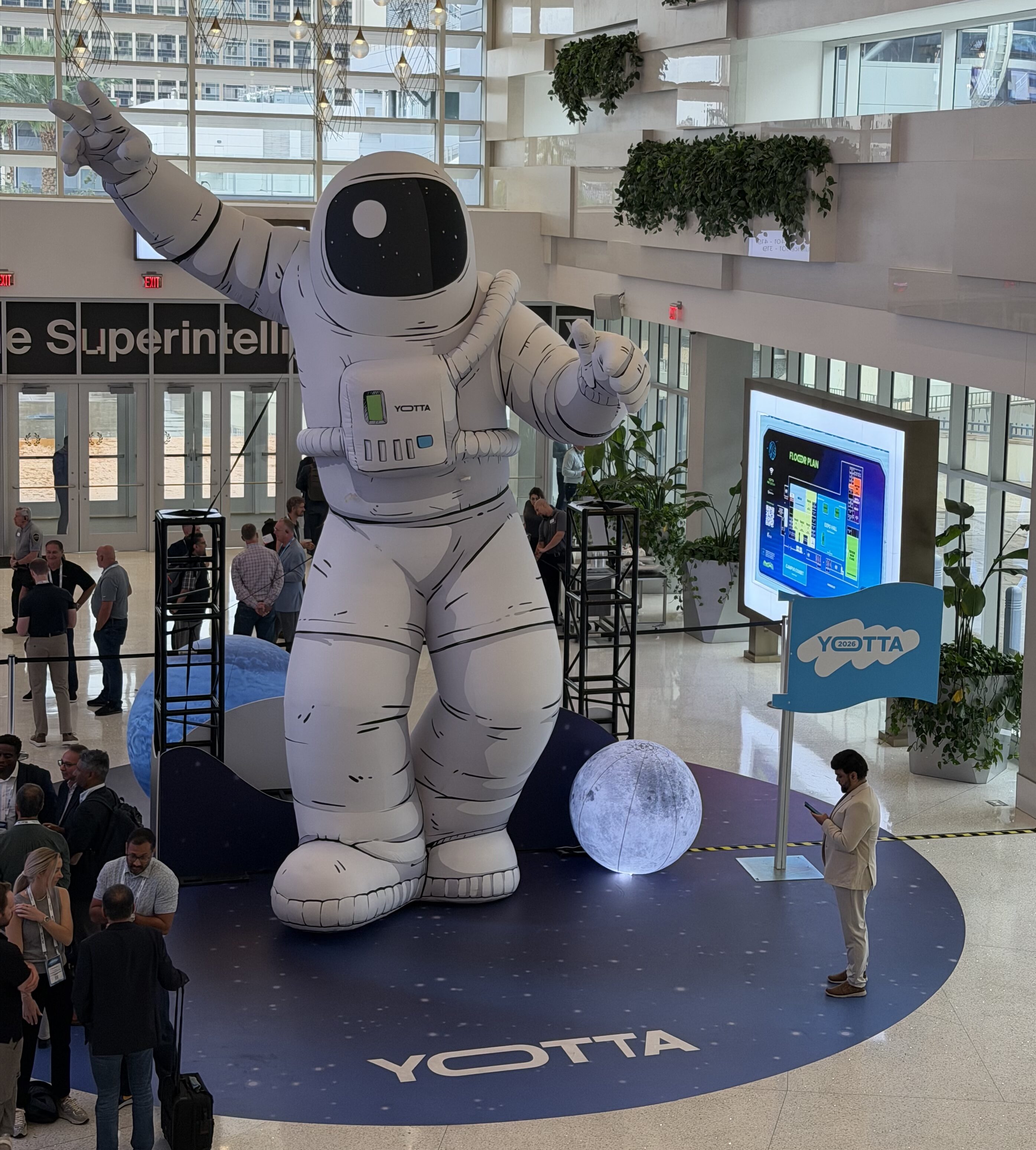
Showing up in person mattered this year. AI infrastructure has stopped being only a tech story. It’s a power story, a land story, and a community story, and the people who shape each chapter used to sit in separate rooms. At Yotta, they shared one. More than 6,000 attendees filled Caesars Forum, including operators, utilities, investors, chipmakers, and reporters.
Here are my takeaways from the show floor.
Why is speed to power still the number one message in data centers?
Every panel I heard and every conversation I had at Yotta came back to speed to power. Operators don’t think long-term. They want to solve today’s problem fast, and they’ll figure out the rest later.
The pressure is easy to understand. Interconnection queues now stretch for years, and every month without power is a month of lost revenue on a facility that’s already built or financed. That math pushes operators toward whatever gets electrons flowing soonest, whether that means existing grid capacity, on-site generation, or moving compute to where power already exists.
How are reporter beats changing as AI and energy converge?
I spoke with several reporters onsite from tech and AI-focused outlets. Many have spent years covering one or two hyperscalers or tech giants, think Google or NVIDIA. Now their editors want them to cover the energy story too.
That shift makes sense. When the biggest constraint on AI growth is power, you can’t cover the companies building AI without covering where their electricity comes from. But it’s a steep learning curve. These reporters know the chips, the models, and the business strategy. Now they’re getting up to speed on interconnection, utility regulation, power markets, and generation, often while still filing on their original beats.
Why is community opposition now central to data center development?
Last year, I asked developers and founders about communities and got blank stares. This year the conversation has flipped. Operators now talk about social license as a real constraint on timelines, not a nice-to-have. They are also proactively looking to strategic communications and community engagement to keep projects moving, which is a major shift from a year ago. Yotta’s own team saw the same shift. In their recap, From Moratorium to Momentum: Rethinking Permission to Build, they note that community opposition, permitting delays, and electricity costs came up repeatedly, whatever the panel topic.
Affordability was a large topic of conversation. The question of who pays for the power has moved from utility commission hearings into statehouses and local council meetings, and operators know it. Everyone I talked to understands the industry must get its messaging right on this. Residents want to know whether a new facility will raise their bills. A vague answer won’t satisfy them.
Living next to this buildout, I can tell you that’s overdue. Communities near data centers have asked these questions for years. The difference now is that the industry is finally listening, and the companies that engage early and honestly will have a real advantage over those that wait for opposition to show up at the zoning hearing.
The bottom line
The industry is racing to solve today’s power problem while a skeptical public and a newly curious press watch every move. Speed matters, but speed without trust slows projects down in the end. Companies that pair urgency with honesty and transparency will earn the trust to build.
At Silverline, we help energy and infrastructure companies tell that story with credibility. If you’re navigating this moment, reach out at workwithus@teamsilverline.com