Winning Community Support for Battery Storage
Battery storage deployment is accelerating across the United States. The sector has expanded dramatically from just 1 GW of capacity in 2020 to over 26 GW by the end of 2024. According to Wood Mackenzie and the American Clean Power Association (ACP), an additional 93 GW is projected to be installed over the next five years.
Yet projects continue to get delayed or cancelled, not because of technology problems or financing issues, but small groups of opponents showing up at public hearings and dominating the conversation.
Dozens of local moratoria on battery energy storage systems (BESS) have been adopted or proposed in recent years, according to research from Sandia National Laboratories and Pacific Northwest National Laboratory.
A recent GoodPower case study examined Arizona—already a national leader in battery storage with nearly 3,900 MW of operational capacity and plans to double that in coming years—to understand community attitudes toward BESS and identify what drives opposition among detractors.
Their research suggests opposition isn't driven by public disapproval of battery storage, but rather by a widespread lack of awareness about the technology itself.
Source: GoodPower / SCC Arizona BESS Neighbor Perception Study
Public Awareness of Battery Storage Remains Low
A national survey of nearly 4,000 Americans found that 71 percent would support a battery storage project in their community. Only 29 percent oppose, and among those opponents, 52 percent have never encountered any information about battery storage.
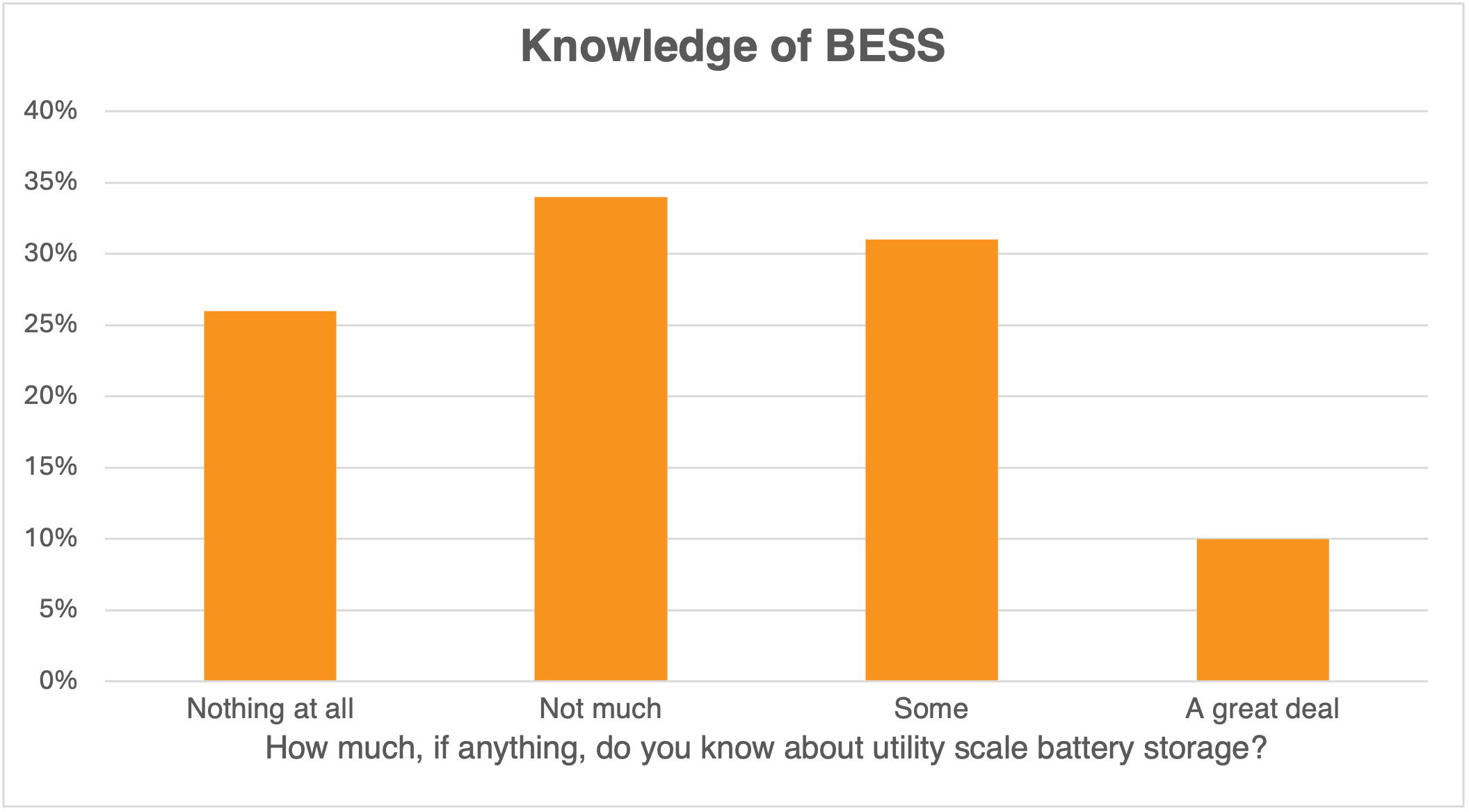
The pattern held in Arizona case studies, where researchers surveyed people living within three miles of existing storage facilities. Nearly 60 percent knew little or nothing about the technology, and only 22 percent even realized there was a storage facility near them.
These are people who live next to battery storage, yet most don't know it's there. That knowledge gap represents a communications opportunity many green energy developers are missing.
Source: GoodPower / SCC Arizona BESS Neighbor Perception Study
Battery Storage Polls Better Than Fossil Fuel Infrastructure
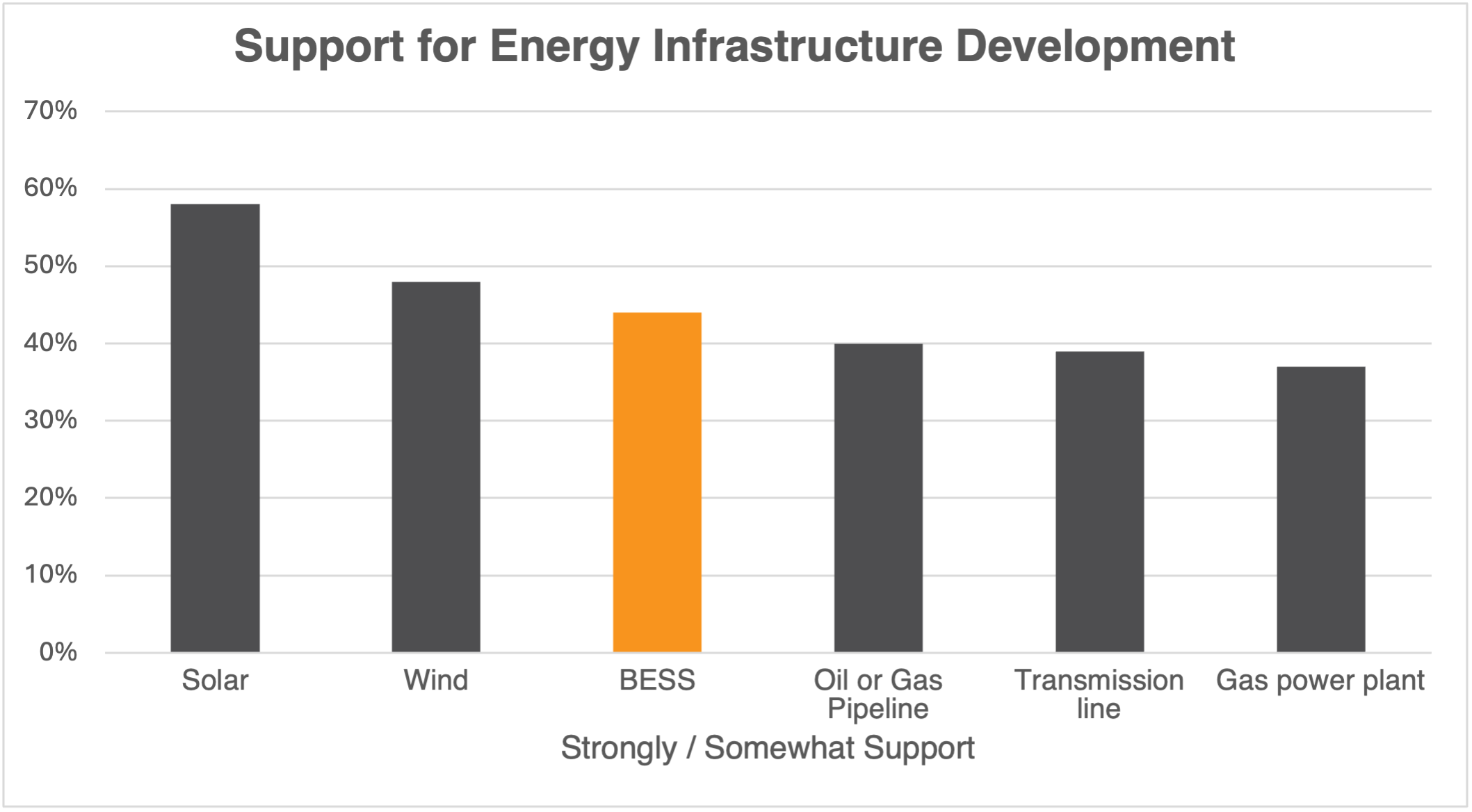
When Arizona residents were asked about their support for different types of energy infrastructure, battery storage (44 percent support) beat out oil and gas pipelines (40 percent), transmission lines (39 percent), and gas power plants (37 percent). 65 percent said they think battery storage provides more benefits than problems.
Even among conservatives, sentiment isn't overtly negative, with 37 percent supporting it, 37 percent opposing, and the rest not having strong feelings either way.
Communities aren’t overtly hostile, they're just uninformed, and that's a challenge that strategic renewable energy PR and community engagement is uniquely positioned to address.
Effective Messaging Strategies for Battery Storage Projects
Not all messages resonate equally with all audiences when it comes to building community support for energy storage.
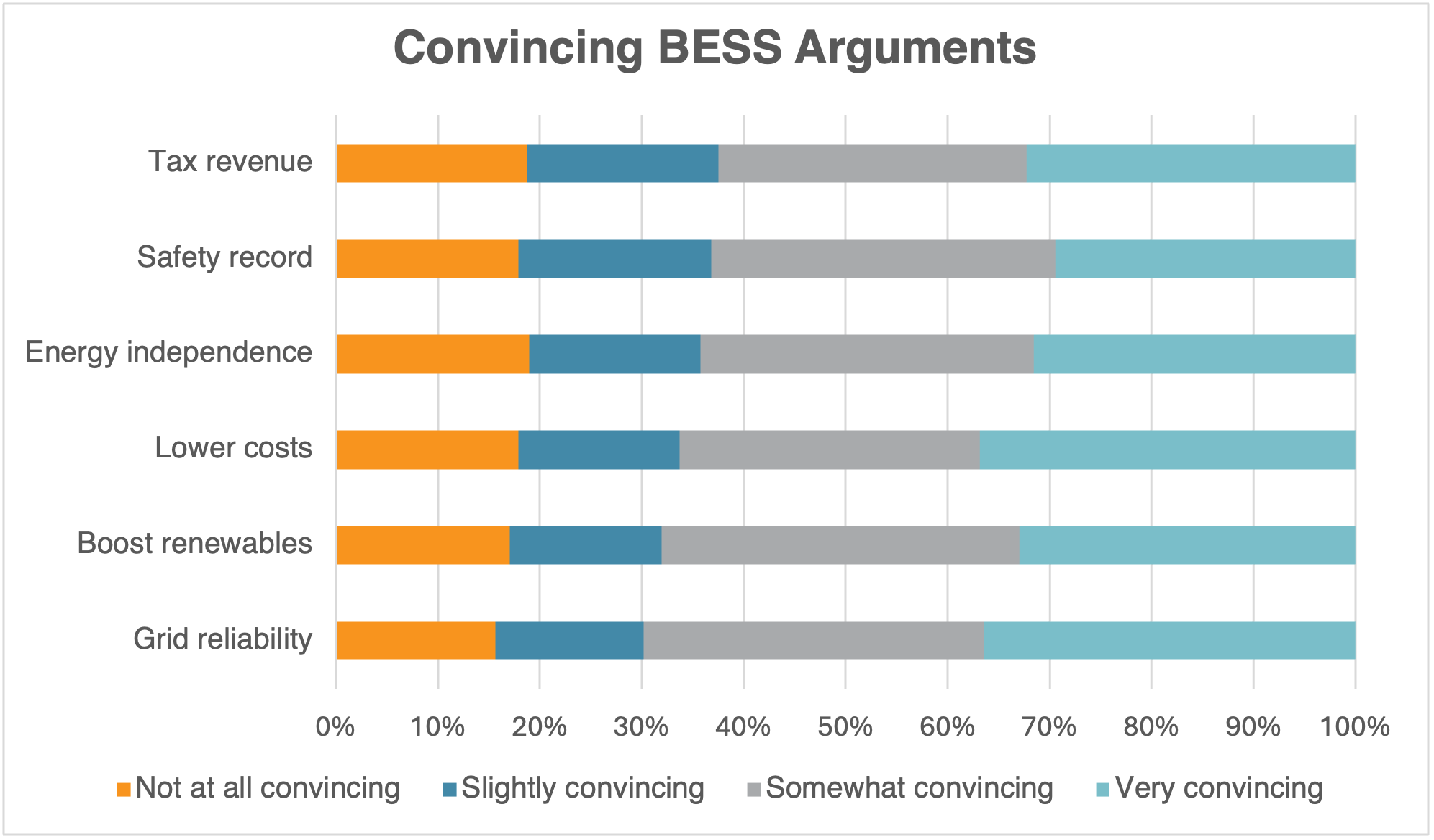
Grid reliability and cost savings work across the board. Nationally, 70 percent said they'd support a storage project if it meant lower electric bills, 68 percent if it meant reliable power, and 63 percent were moved by local jobs.
In Arizona, grid reliability messaging convinced 84 percent of liberals, 71 percent of moderates, and 64 percent of conservatives. "Boosting renewables" messaging, however, worked with 88 percent of liberals but only 58 percent of conservatives.
When the goal is building broad community support, leading with "this will keep your power on during a heat wave" tends to work better than "this will help us transition to renewables."
Source: GoodPower / SCC Arizona BESS Neighbor Perception Study
Addressing Fire Safety Concerns for Battery Storage
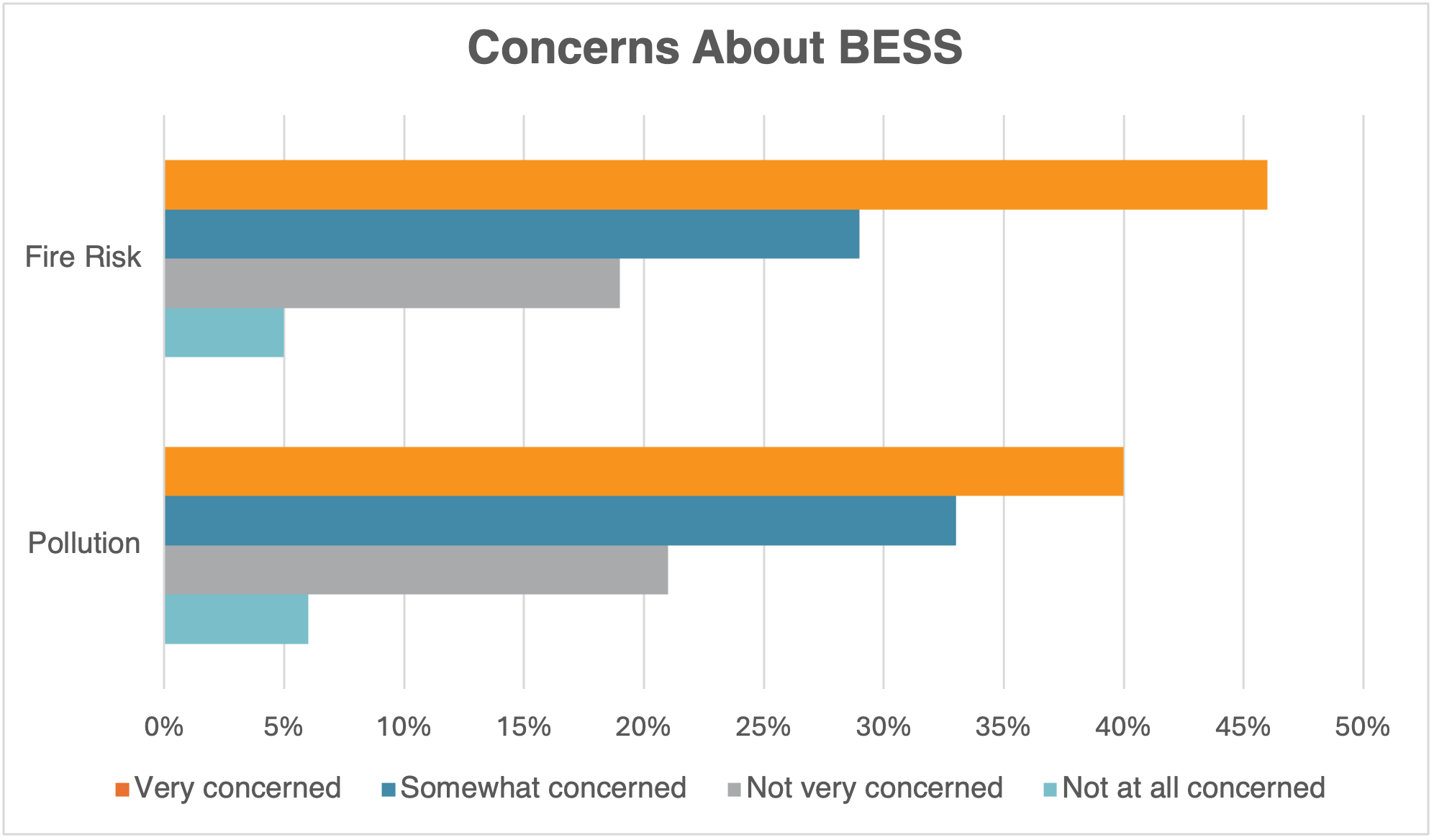
Fire safety is a topic that can't be avoided in community discussions about battery energy storage. When asked about concerns, 75 percent of surveyed Arizona residents said they worried about fire risk.
Yet most people weren't specifically worried about battery storage fires or emissions concerns. Their anxiety came from associating the technology with other lithium battery incidents like phones exploding or EV fires.
When researchers gave people information about fire safety measures, concern dropped by a net 10.3 percentage points.
Fire risk isn't a deal breaker for community acceptance, but developers can't afford to wait until someone brings it up at a hearing to address it.
Trusted Messengers for Community Outreach
Only 31 percent of Arizona residents said they trusted energy developers to provide information about projects.
Who do communities trust? Fire department staff ranked highest at 58 percent, followed by people who already live near storage facilities (49 percent) and energy-focused nonprofits (46 percent).
A fire chief explaining safety protocols will land differently than a company spokesperson saying the same words. Site visits to existing projects or connecting skeptical community members with neighbors from places where storage is already operating, can be more effective than corporate presentations.
Source: GoodPower / SCC Arizona BESS Neighbor Perception Study
Community Benefit Agreements Build Local Support
In Arizona, 64 percent of people said they'd be more likely to support a project if the developer signed a community benefit agreement, and 57 percent said the same about investing in local firefighting resources.
Focus group participants were blunt about their feelings. They've seen companies make big promises, cause problems, and then disappear. They want accountability with real consequences, and community benefit agreements are a way to proactively build trust before opposition forms.
Early Engagement Prevents BESS Project Delays
If there's one takeaway from community perception research, it's that timing matters more than most developers realize.
Once misinformation spreads and opposition organizes, changing people's minds becomes significantly harder. The best time to shape how a community thinks about a project is before they've thought about the subject.
Successful community engagement for BESS and solar projects typically includes:
Engaging communities before filing permits
Leading with reliability and cost messaging instead of climate messaging
Bringing in fire officials and existing neighbors as trusted messengers
Being upfront about safety from day one, and making real commitments through enforceable agreements
Battery storage has majority support across America. It's not that people hate the technology, it's that a vocal minority is defining the story before anyone else has a chance to tell it.
How Silverline Supports Renewable Energy Community Engagement
As a PR firm specializing in clean energy PR, Silverline Communications works with green energy developers to build and execute community engagement strategies that earn local trust early. If your organization is planning a battery storage or solar project and wants to get ahead of potential opposition, get in touch.
